


“Which platform should we use?” is usually asked as a features question. In our experience it is really a question about your team, your margins and how different your business is from everyone else’s. All four platforms in this guide can run a successful store. Each one is the wrong choice for some businesses.
Here is how we help clients decide between Magento (Adobe Commerce), Shopify, BigCommerce and OpenCart in 2026.
The short version
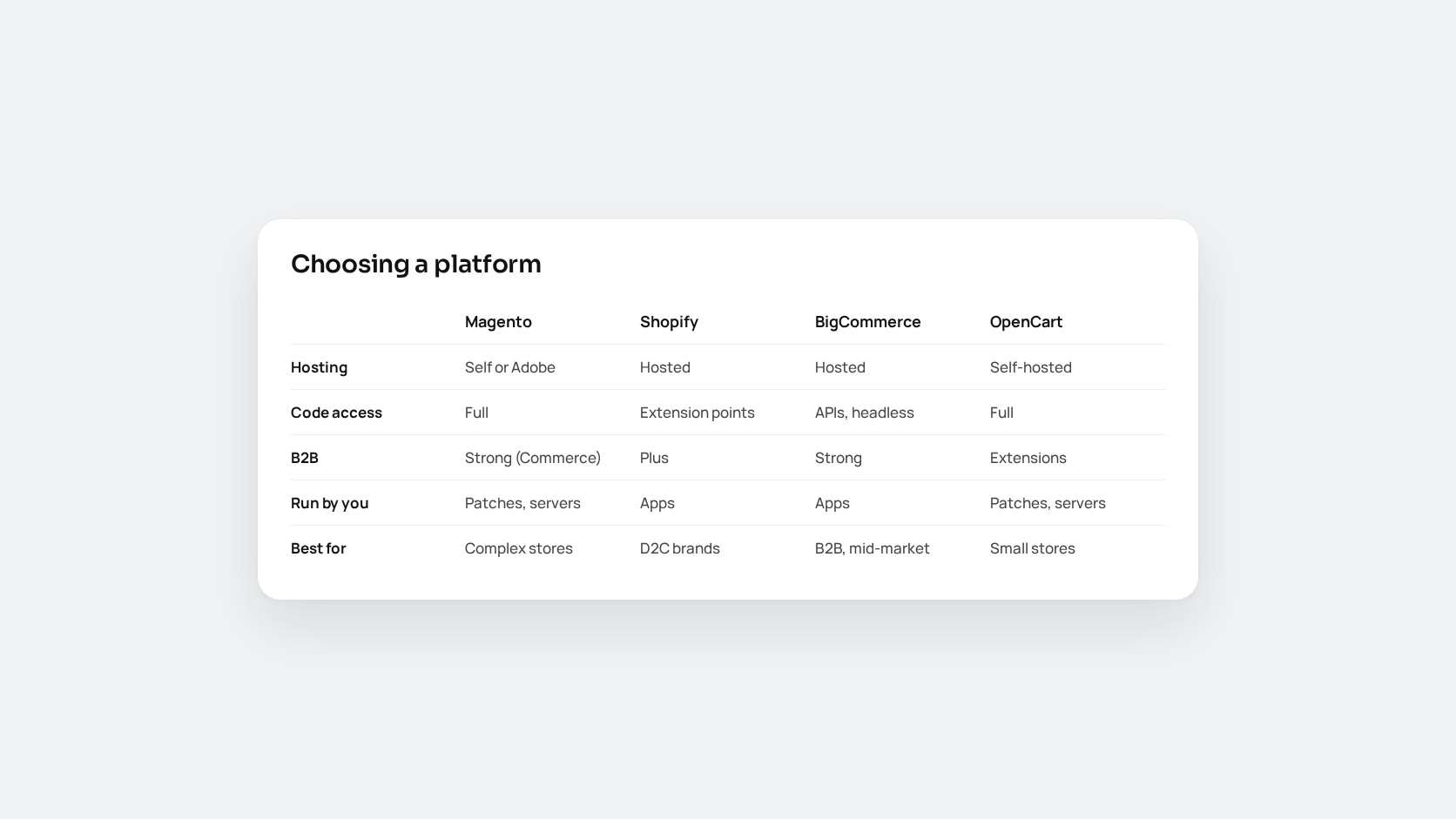
| Platform | Model | Best for | Main trade-off |
|---|---|---|---|
| Magento Open Source / Adobe Commerce | Self-hosted or Adobe cloud, open code | Complex catalogues, custom logic, B2B, many stores | You run (or pay someone to run) servers, patches and upgrades |
| Shopify | Hosted SaaS | Fast launch, D2C brands, strong app ecosystem | Logic must fit Shopify’s extension points; costs grow with apps |
| BigCommerce | Hosted SaaS, headless-friendly | B2B and mid-market, fewer app dependencies | Smaller ecosystem; slower company growth |
| OpenCart | Self-hosted, open code | Small stores, tight budgets, simple needs | Thinner ecosystem and slower security response |
Five questions that decide it
1. How different is your business logic?
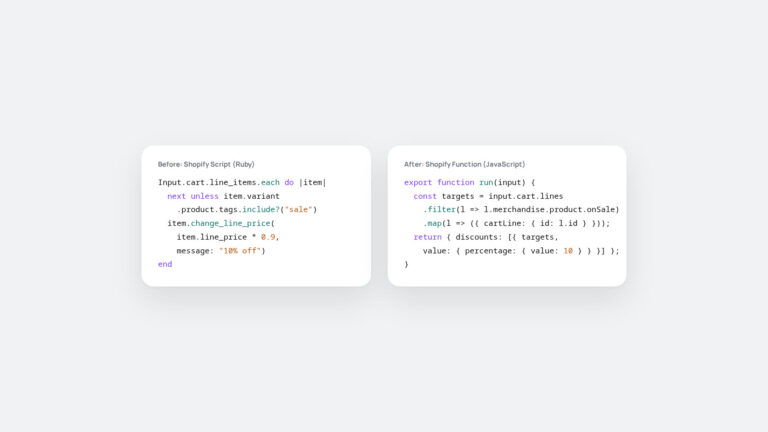
If your pricing, catalogue and checkout look like most stores, a hosted platform will serve you well and cost less to run. If you have configurable products with engineering rules, customer-specific catalogues, complex tax, several warehouses with their own rules, or a checkout that does unusual things, you will spend your time working around a SaaS platform’s limits. That is where Magento’s full code access pays for itself.
2. Who will run it?
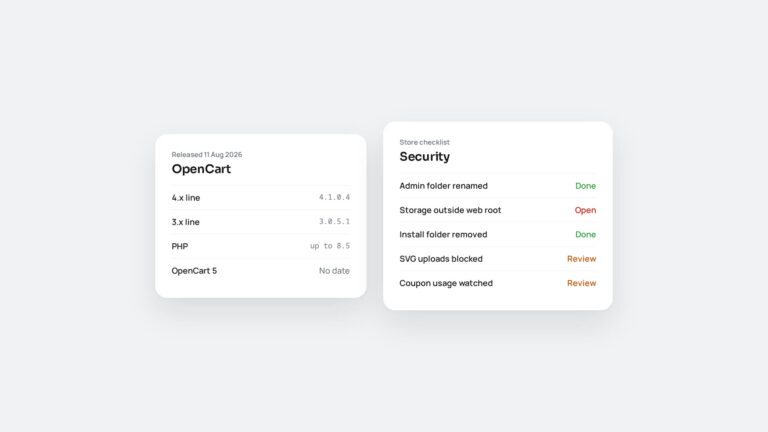
Self-hosted platforms need someone responsible for servers, security patches, PHP upgrades and monitoring. In 2026 that is not a small job: Magento now ships security patches monthly, and PHP2Shell showed that even PHP itself needs emergency updates. If you have no technical team and no agency on a retainer, a hosted platform is safer.
3. What will it cost over three years?
Compare total cost, not the plan price:
- Hosted platforms: subscription, transaction or payment fees, apps (often the largest line), themes and development.
- Self-hosted platforms: hosting, monitoring, maintenance and patching, extensions, and development.
A Shopify store with fifteen paid apps can cost more than a well-run Magento store. A Magento store with no maintenance budget will cost far more after its first security incident.
4. How important is B2B?
B2B needs company accounts, buyer roles, quotes, negotiated prices, purchase orders and ERP integration. Adobe Commerce and BigCommerce have the most complete built-in B2B features. Shopify has improved a lot, especially on Plus. Magento Open Source and OpenCart usually need extensions for the full set.
5. How will customers find you?
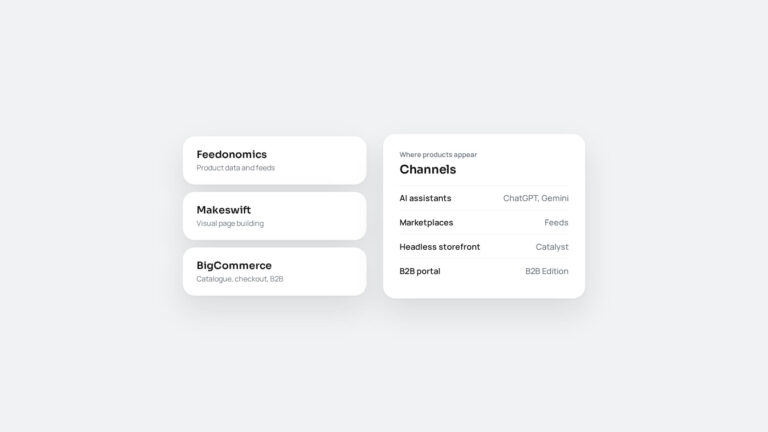
In 2026 there is a new answer: AI assistants. Shopify’s Agentic Storefronts and BigCommerce’s Feedonomics are both built to put your catalogue in front of ChatGPT, Gemini, Copilot and similar tools. Self-hosted platforms can do the same through feeds and structured data, but with more work. Whatever the platform, clean and complete product data now matters more than ever.
Our recommendations by store type
- New D2C brand, small team: Shopify. Launch quickly, keep apps to a minimum, and spend the savings on marketing.
- Growing B2B distributor: BigCommerce or Adobe Commerce, depending on how custom the pricing and ERP integration are.
- Established retailer with complex catalogue or many stores: Magento, with a proper hosting, monitoring and patching routine. With Hyvä now free, a fast storefront no longer needs a commercial theme.
- Small local store, limited budget, some technical help: OpenCart, kept up to date, or Shopify’s entry plans if nobody technical is available.
Migrating is expensive, so choose for the next five years
Moving platforms means migrating products, customers, orders, URLs and SEO, rebuilding the design and retraining the team. Choose for where the business will be in five years, not where it is today. And if you are already on a platform that fits, improving it is almost always cheaper than replacing it.
We build and maintain Magento stores and custom e-commerce software. If you want an independent view on your next step, get in touch.